
Markets now expect the Fed to normalise rates gradually.

Sliding for the fifth straight session, the rupee fell 3 paise to close at a fresh lifetime low of 79.06 against the US dollar on Thursday amid a strong greenback overseas and unrelenting foreign fund outflows. At the interbank forex market, the local unit opened at 78.92 against the greenback and witnessed an intra-day high of 78.90 and a low of 79.07. It finally settled at 79.06, down 3 paise over its previous close of 79.03.

Finance minister Nirmala Sitharaman on Wednesday exuded confidence that inflation would further decline and the government is on track to meet its budgetary target for deficit and said that there is no fear of stagflation in India. Replying to the debate on first batch of Supplementary Demands for Grants 2022-23 in Lok Sabha, the finance minister said inflation has come down and it is now in the tolerable band of the RBI. Inflation has been declining since April 2022 and it is declining further, she said.

The rupee tumbled 19 paise to close at a fresh lifetime low of 77.93 against the US dollar on Friday as rising crude oil prices and unabated foreign capital outflows soured sentiment. A sell-off in equity markets and stronger greenback overseas also weighed on the domestic unit, forex traders said. At the interbank foreign exchange market, the local currency opened at 77.81 and witnessed an intra-day high of 77.79 and a low of 77.93 against the US dollar.

The rupee depreciated by 37 paise to close at 79.62 against the US dollar on Thursday despite sustained foreign capital inflows and a positive trend in equities. At the interbank foreign exchange market, the local currency opened at 79.22 and saw an intra-day high of 79.22 and a low of 79.94 against the American currency. It finally ended at 79.62, down 37 paise over its previous close of 79.25.

The Reserve Bank of India cut its repo rate by 25 basis points to 6.50 per cent.

The year 2015 may well turn out to be a watershed in global macroeconomic adjustment.

RBI Governor Raghuram Rajan on Tuesday kept the repo rate unchanged 6.50 per cent.
The rupee has been under immense pressure due to a host of reasons including soaring crude oil prices, sustained foreign fund outflows and widening current account deficit.
The marginal rise in June headline inflation to 4.9 per cent may be a precursor to a pronounced increase in the coming months and RBI is unlikely to cut rates at the forthcoming policy meet on July 30, say analysts.
The Reserve Bank of India (RBI) has announced a dollar-rupee two-year sell-buy swap auction for $5 billion on March 8, which will suck out rupee liquidity from the system. The swap will be in the nature of a simple sell/buy foreign exchange from the RBI side, in which a bank will buy US dollars from the central bank and simultaneously agree to sell the same amount of US dollars at the end of the swap period. "With a view to elongating the maturity profile of its forward book and smoothen the receivables relating to forward assets, it has been decided to undertake sell/buy swap auction of $5 billion on March 8, 2022," the RBI said in a statement. The auction cut-off will be based on the premium amount in paisa terms up to two decimal points.

The first quarter earnings season will dictate the trend in the equity markets in this holiday-shortened week amid absence of major macroeconomic drivers, say analysts. Besides, lacklustre global markets may increase volatility in the market, they added. Equity markets would remain closed on Wednesday for Bakri-Id.

'The prospects for both India and the global economy is that we are headed towards a very difficult time.' 'I see very uncertain at least 8-10 months for both India and the rest of the world.'

Investors are anxious over the US-China trade tension, a sharp devaluation in yuan and uncertainty over Kashmir issue.

It has been a choppy calendar year 2022 (CY22) for global financial markets amid the spectre of rising inflation that led most central banks, especially the US Federal Reserve (US Fed), to tighten their monetary policy. Most equity indices across the globe have seen a sharp fall from their respective peak levels in this backdrop. FTSE India, for instance, has corrected 16 per cent from its October peak.

Should we not be creating roles in India for the talented, asks Ajit Balakrishnan.

The rupee's fall against the dollar is bad news for companies which have increased their exposure to foreign currency loans in recent years.

'It was because of the huge selloff in the Indian equities that the rupee fell so sharply against the dollar on Friday.'
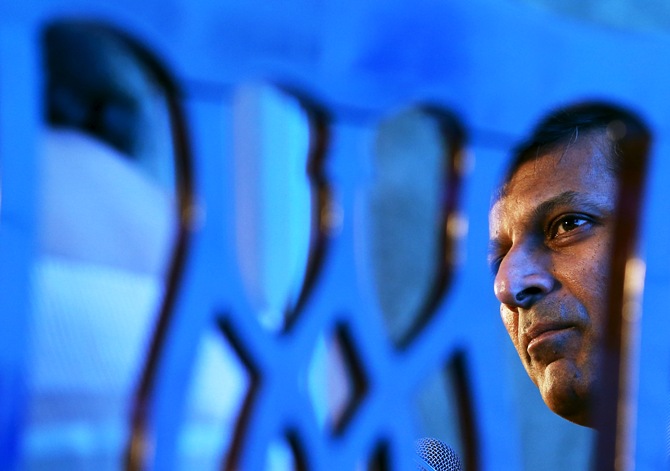
The RBI Governor brought down retail inflation to 3.8% in July.

'Valuations are very attractive, and most companies are cash-rich with strong dividend yields.'

Multi-currency pre-paid cards are a good option while travelling abroad.

Equity benchmark Sensex tanked over 1,000 points in the opening session on Friday tracking losses in index majors ICICI Bank, HDFC twins and Reliance Industries amid a negative trend in global markets.

Titan was the top gainer in the Sensex pack, climbing over 4 per cent, followed by Bajaj Auto, Maruti, Reliance Industries, ONGC and UltraTech Cement.

The Summit could look at the possibility of starting credit facility in local currency by the BRICS Bank.

The 5-nation BRICS group on signed an agreement to create a $100 billion pool of foreign-exchange reserves to help each other.

The rupee's stability in the last 12 to 18 months made corporates reduce hedging

IndusInd Bank was the top laggard in the Sensex pack, falling over 5 per cent, followed by HDFC, Axis Bank, PowerGrid, SBI, Bajaj Finserv and Bharti Airtel.

Sensex rally was driven by Bajaj FinServ, Reliance Industries, Bajaj Finance, ICICI Bank, HDFC and Axis Bank. NSE Nifty climbed 326.50 points to end at 15,245.60.

'This is a good time to restructure your portfolio because the sectors and stocks that performed in the last bull market may not perform as much now.'

The employment situation remains dire. Whatever can be done to promote greater low-skill employment should be pursued aggressively, advises former chief economic adviser Shankar Acharya.

Since most Indian firms have kept their forex exposure unhedged, credit profile of companies in the highly sensitive sectors such as oil & gas, metal & mining, airlines could weaken substantially, says Anup Roy.

ICICI Bank was the top gainer in the Sensex pack, rising around 3 per cent, followed by Axis Bank, HDFC twins, SBI, L&T, ONGC and Infosys. On the other hand, Sun Pharma, Asian Paints, Nestle India, UltraTech Cement and HUL declined. NSE Nifty rose by 79.60 points or 0.67 per cent to 11,914.20.

'Hope they don't tinker around with capital gains tax in any way.'

Forex traders said a stronger dollar also dragged the rupee down.

Craig Chan, executive director and head of forex strategy & fixed income division (Asia-ex Japan), Nomura Singapore, in an interview with Business Standard's Rajesh Bhayani, shares his outlook on the dollar.

Royal Bank of Scotland and JP Morgan were also fined over attempts to rig currency benchmarks in a year-long probe that has put the largely unregulated $5 trillion-a-day market on a tighter leash, with dozens of dealers suspended or fired.
Bigger players tap non-deliverable forwards market to make a killing.
Bajaj Finance was the top loser, tumbling 4.68 per cent, followed by Tech Mahindra, IndusInd Bank, ICICI Bank, SBI, Reliance Industries, Bharti Airtel and HCL Tech. NSE Nifty crashed 290.70 points or 2.43 per cent to 11,680.35.

The rupee had retreated from three-week high and ended six paise down at 60.67 against the dollar on demand from importers for the US currency in Thursday's trade.

Bombay Stock Exchange is working on trading in different categories like debts, interest rate derivatives, forex and power.
 © 2026 Rediff.com - Advertise with us - Disclaimer - Privacy Policy - Sitemap - Feedback - About us - Terms of use - Grievances